Awareness
Notice what’s happening.
Before you can change a response you have to catch it. Awareness is the skill of noticing the body, the breath and the feeling while it is still small enough to work with.

Mindfulness teaches a deceptively simple skill. For a child that might sound like: my heart is pounding, I'm getting really frustrated, I want to yell, I need some space. That space between feeling and reacting is something we practice again and again.
We don't just tell kids how to regulate. We practice it with them.
Four capacities for navigating ourselves, our relationships and emotionally demanding environments.
Notice what’s happening.
Before you can change a response you have to catch it. Awareness is the skill of noticing the body, the breath and the feeling while it is still small enough to work with.
Understand what you and others need.
Boundaries are not walls. They are the clarity that makes connection safe: knowing what you need, asking for it, and respecting the same in someone else.
Stay connected without removing accountability.
Warmth and high expectations are not opposites. Compassion keeps the relationship intact while the hard conversation still happens.
Choose intentional action, especially when it’s hard.
Discipline is what turns a strategy you know into a strategy you use. It is built through repetition, not instruction.
A practical learning cycle that helps children and adults move from awareness to action.
ABCDs build the capacities. DEEP gives us a process for practicing them.
Mindfulness is a system of practices that draw you back to present moment awareness. It rewires the brain to be more resilient to stress and anxiety.
Pick an emotional experience from the past week and go D.E.E.P. to explore the practice and build your mindful awareness skills.
There are many effective SEL methods, yet we still often wonder: what happens when you aren’t “average”? The Yoga Mouth Life Support System (YMLSS) builds mindful skills for communities with high levels of trauma or higher-than-average support needs. We specialize in special needs.
This community-centered approach puts educators and families in partnership with the student to build healthy, emotionally aware relationships, modeling the awareness we wish to see in our students and children.
The tools
Foundational tools of mindful awareness and the essential skills for emotional regulation. A framework for self-assessment, a check on readiness for next steps, and the foundation for co-regulation.
The practice
Once the ABCDs feel comfortable, DEEP makes them a regular, accessible daily practice of emotional regulation: experiencing the world with intention, paying attention and meaning it.
The connection
A framework for practicing social-emotional skills together. Shared boundaries and language that build community awareness, strengthen connection and create a shared sense of safety within relationships.
The integration
Where the three support pillars come together: resilience and awareness through discomfort, and the confidence to reach for your own tools in a fully individualized way.
Our coaches are educated, practicing mindfulness professionals. They model the practices joyfully and professionally, beside students as they learn to do the same.
We pause for their growth, but we do not stop because it gets too hard. We push each other to stay kind and compassionate when we feel afraid or vulnerable. Our coaches’ strong, honest boundaries make a courageous container for increased emotional awareness and feelings of community. This work is bigger than us as individuals: we serve students where they are, not where we think they should be.
YMLSS builds the foundations underneath other SEL curricula and protocols, so they can be equitable for every student’s support needs. It holds each of us accountable to our role as an individual, and to our role as a member of a shared human experience. We approach mindfulness as the courage to be self-aware and deeply connected to others.
Once the ABCDs and D.E.E.P. are introduced, the Yinja Codes give a whole community a shared language for practicing them together: shared boundaries and words for emotional concepts that support co-regulation, self-awareness and resilience. Use them as community guidelines, then explore what happens when everyone practices them at once.
I will practice mindfulness in my words, actions and relationship to myself and others every day.
Non-violence
I practice non-violence with my words and actions towards myself, others and my community every day.
Boundaries
I set healthy boundaries with myself and others to have positive and peaceful relationships.
Honesty
I am courageous and honest with my words and actions.
Self-control
I have awareness of my emotions and actions. I manage my emotions and body in peaceful and kind ways.
The three support pillars lead to this one. The I AM OK mantra builds resilience and awareness through discomfort: it makes space to manage emotional reactivity and to reach for your own tools, in your own way, with independence and confidence.
Families can practice it with Kristi on video: practice at home.
Kristi Jenkins walks through the Yoga Mouth Life Support System — the mindful alphabet, the DEEP cycle and the community code that ties them together. In her words: the short, nerdy version, for educators and funders who want it before the meeting.
The Life Support System, its connected frameworks, curriculum and training materials were developed by Yoga Mouth Collective. This is an introduction to the language, not the curriculum. School partnerships, professional development and licensed program use run through us.
Our curriculum translates mindfulness, neuroscience and SEL into experiential learning students can connect to real situations:
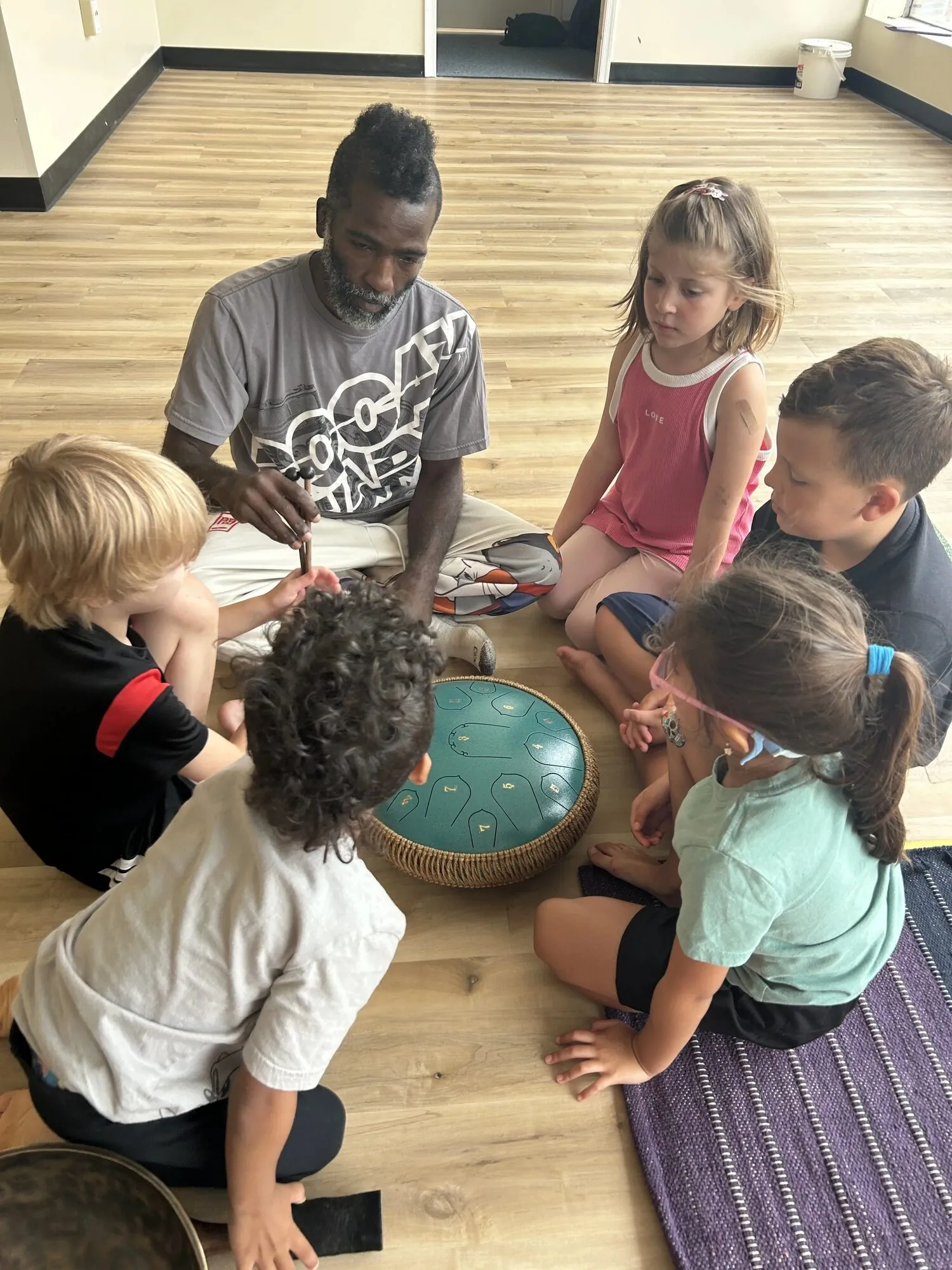
Mindfulness is the core of clinical mental health practice and of SEL curricula like Conscious Discipline and Zones of Regulation. Yoga Mouth sits deliberately outside the clinical system: we are a prevention-focused, educational partner that families can reach before, alongside and after clinical services.
Programming ranges from universal prevention and community-building to more intensive small-group support, and is designed to complement the SEL systems a school already runs, not compete with them.
See how this works in schools